Ten major events of 2025: From Operation Sindoor to Delhi blast, IndiGo crisis, and more
As the year 2025 draws to a close and the nation looks forward to the New Year 2026 with fresh expectations and renewed optimism, here are the ten major events of the year bidding farewell:
From terror attacks that raised serious questions about the country’s internal security arrangements to the anti-terror “Operation Sindoor”, which highlighted the government’s firm stance and the security forces’ defence capabilities, the year 2025 has been one if the most turbulent and challenging years for India.
The year 2025 saw India plunging into one of its worst aviation crises, but at the same time, reforms in the Goods and Services Tax (GST) provided some much-needed relief to the “tax-terrorised” citizens of the country.
Advertisement
The year also exposed administrative lapses by state governments when dozens of devotees were killed in Uttar Pradesh’s Prayagraj during Mahakumbh 2025, and young fans were crushed in Bengaluru during RCB’s IPL 2025 victory celebrations.
Advertisement
As the year 2025 draws to a close and the nation looks forward to the New Year 2026 with fresh expectations and renewed optimism, here are the ten major events of the year bidding farewell:
Maha Kumbh 2025
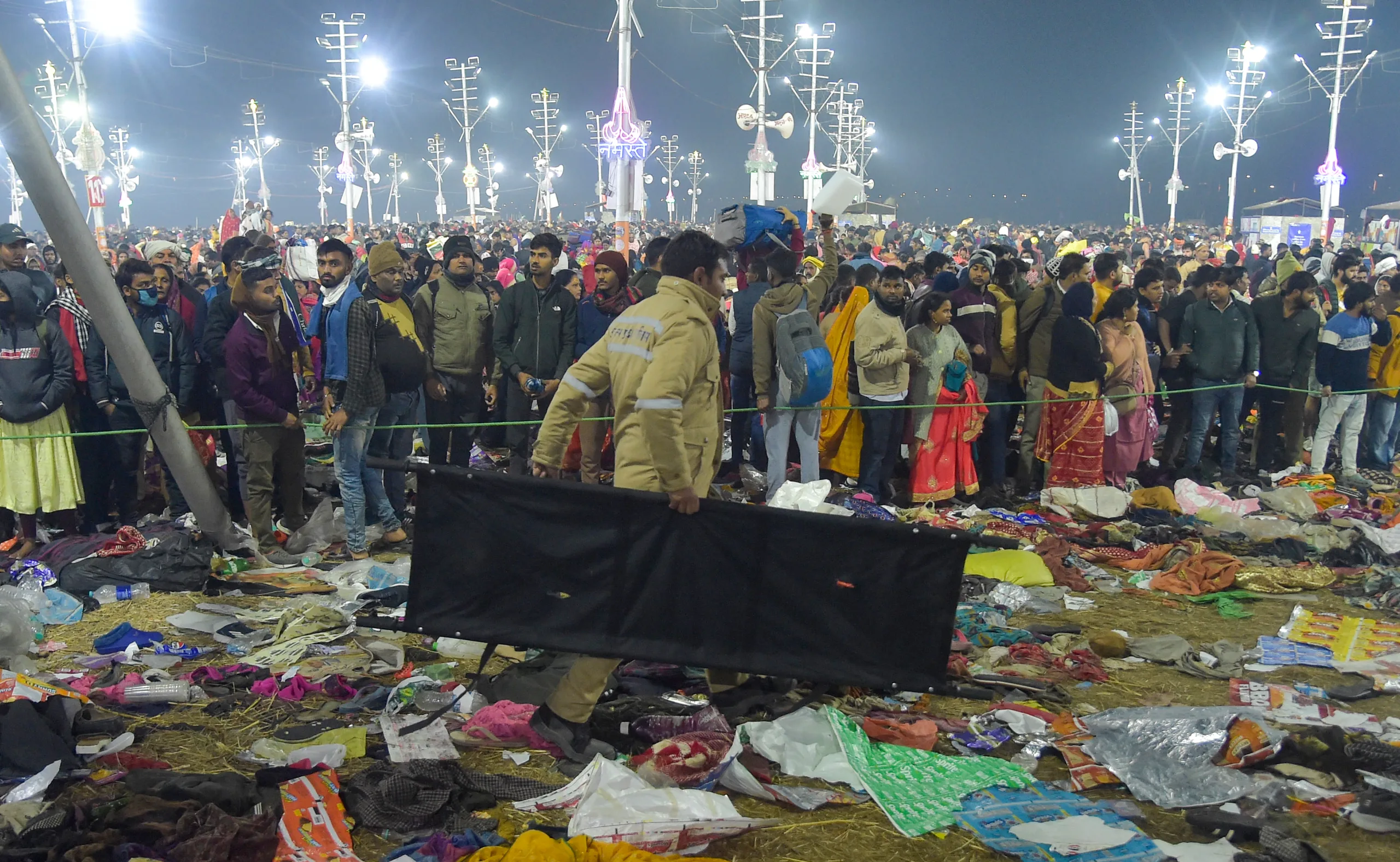
Prayagraj: The aftermath of a stampede at the Sangam during the ongoing Maha Kumbh Mela 2025 in Prayagraj on Wednesday, January 29, 2025. (File Photo: IANS)
The Maha Kumbh 2025 has become one of the largest religious gatherings in history, with over 660 million (66 crore) devotees participating in the bathing rituals over its 45-day duration.
However, the stampede on January 29 (Mauni Amavasya) exposed serious administrative lapses in crowd management and event planning. Moreover, the arrangements at VVIP ghats frustrated common people, as lanes reserved for VVIPs remained largely empty, while those for the general public were severely overcrowded.
A stampede at Chinnaswamy Stadium in Bengaluru also ruined RCB’s IPL 2025 title victory celebrations. Six devotees were also killed in a crush at Mansa Devi temple in Haridwar.
Pahalgam Terror Attack
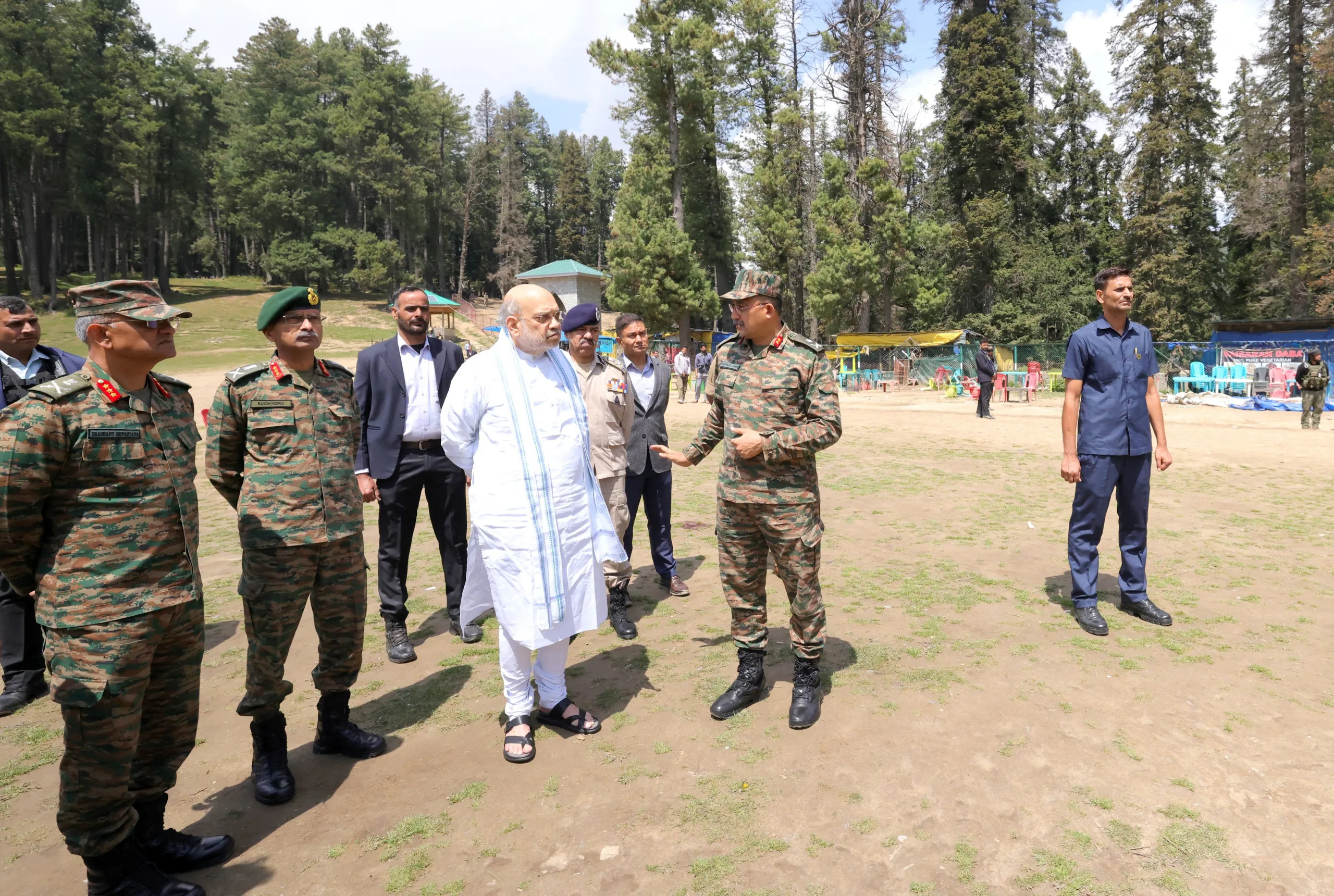
Anantnag: Union Home Minister Amit Shah visits the site of the Pahalgam terror attack and receives a detailed briefing about the incident from officers, in Anantnag, Wednesday, April 23, 2025. (File Photo: IANS)
On April 22, a group of terrorists stormed Pahalgam, a popular tourist destination in Jammu and Kashmir. The Pakistan-backed terrorists killed 26 people, mostly Hindu tourists from across the country. The victims also included a local guide, who was killed while protecting a Hindu tourist.
Reports claimed that the terrorists asked people about their religion and killed only Hindus, a clear attempt to incite communal violence in the country.
However, India remained united, and security forces avenged the attack by destroying terror camps deep inside Pakistan and Pakistan-occupied Kashmir(PoK).
Operation Sindoor and India-Pak conflict
New Delhi: Lieutenant General Rajiv Ghai, Air Marshal AK Bharti, Vice Admiral A. N. Pramod and Major General SS Sharda address a press briefing on ‘Operation Sindoor’ in New Delhi, Monday, May 12, 2025. (File Photo: IANS/Prem Nath Pandey)
In response to the Pahalgam terror attack, India launched Operation Sindoor, destroying terror camps in Pakistan and PoK.
Pakistan retaliated with a large-scale drone and missile attack, targeting civilian, religious, and military sites in India. Among the targets were a temple in Jammu, a gurdwara in Poonch, and Christian convents.
In response, India inflicted significant damage on Pakistan’s military infrastructure, ravaging radar facilities in Lahore and Gurjanwala.
New Delhi also warned that its response would be even stronger if Pakistan launched another attack. The attacks and counterattacks continued for four days before US President Donald Trump suddenly announced a ceasefire.
Both India and Pakistan confirmed the development within hours. Later, India clarified that the ceasefire was directly negotiated between the Director Generals of Military Operations (DGMOs) of the two countries and that the US had no role in it.
Trump’s Imposition of Tariffs on India
After the ceasefire, while Pakistan thanked US President Trump for his role, India refused to acknowledge the US involvement.
Pakistan eventually signed a trade deal with the US, while negotiations for a bilateral trade agreement between Washington and New Delhi were halted. Later in July, Trump announced the imposition of 25 per cent tariffs on India, followed by an additional 25 per cent penalty for buying Russian Federation oil.
Modi’s China Visit
With ties with the US strained, India decided to recalibrate its bilateral relationship with China. Prime Minister Narendra Modi visited China to attend the Shanghai Cooperation Organisation (SCO) Summit, his first visit in seven years. The PM met with Chinese President Xi Jinping and Russian President Vladimir Putin, delivering a strong diplomatic message to the US.
Reacting to the meeting, Trump acknowledged that he may have lost New Delhi to “deepest, darkest” Beijing.
Jagdeep Dhankhar’s Resignation
Another major political event of 2025 was Vice President Jagdeep Dhankhar’s resignation. Dhankhar tendered his resignation after the first day of the Monsoon Session of Parliament, citing poor health.
However, his sudden resignation prompted speculations, with the Opposition Congress claiming there is more to it than meets the eye.
Several media houses reported that Dhankhar was forced to resign as the government was miffed with his decision to accept an Opposition motion to impeach Justice Yashwant Varma. Later, BJP leader CP Radhakrishnan replaced Dhankhar.
GST Reforms
The Goods and Services Tax (GST) Council, on September 3, announced a major rate overhaul. After the 56th GST Council meeting, Finance Minister Nirmala Sitharaman said the GST slabs are being reduced to just two – 5 per cent and 18 per cent, removing the 12 per cent and 28 per cent slabs.
The government also introduced a new 40 per cent slab for luxury and sin goods. The GST rationalisation came as a much-needed relief to the “tax-terrorised” people of India.
Naxal Crackdown
Intensified Naxal crackdown was one of the major highlights of 2025. Security forces intensified operations against Left Wing Extremism in 2025, delivering major blows to Naxal groups across central India.
On 21 May, security forces neutralised Nambala Keshava Rao, also known as Basavaraju, delivering one of the most decisive blows to the Maoist insurgency.
Later in November, security forces achieved another significant breakthrough as they neutralised one of the most dreaded Maoist commanders, Madvi Hidma, also known as Hidmalu and Santosh.
The intensified operation was aimed at achieving the Union Home Minister’s goal of eliminating Naxalites from the country before March 2026.
Red Fort Bomb Blast
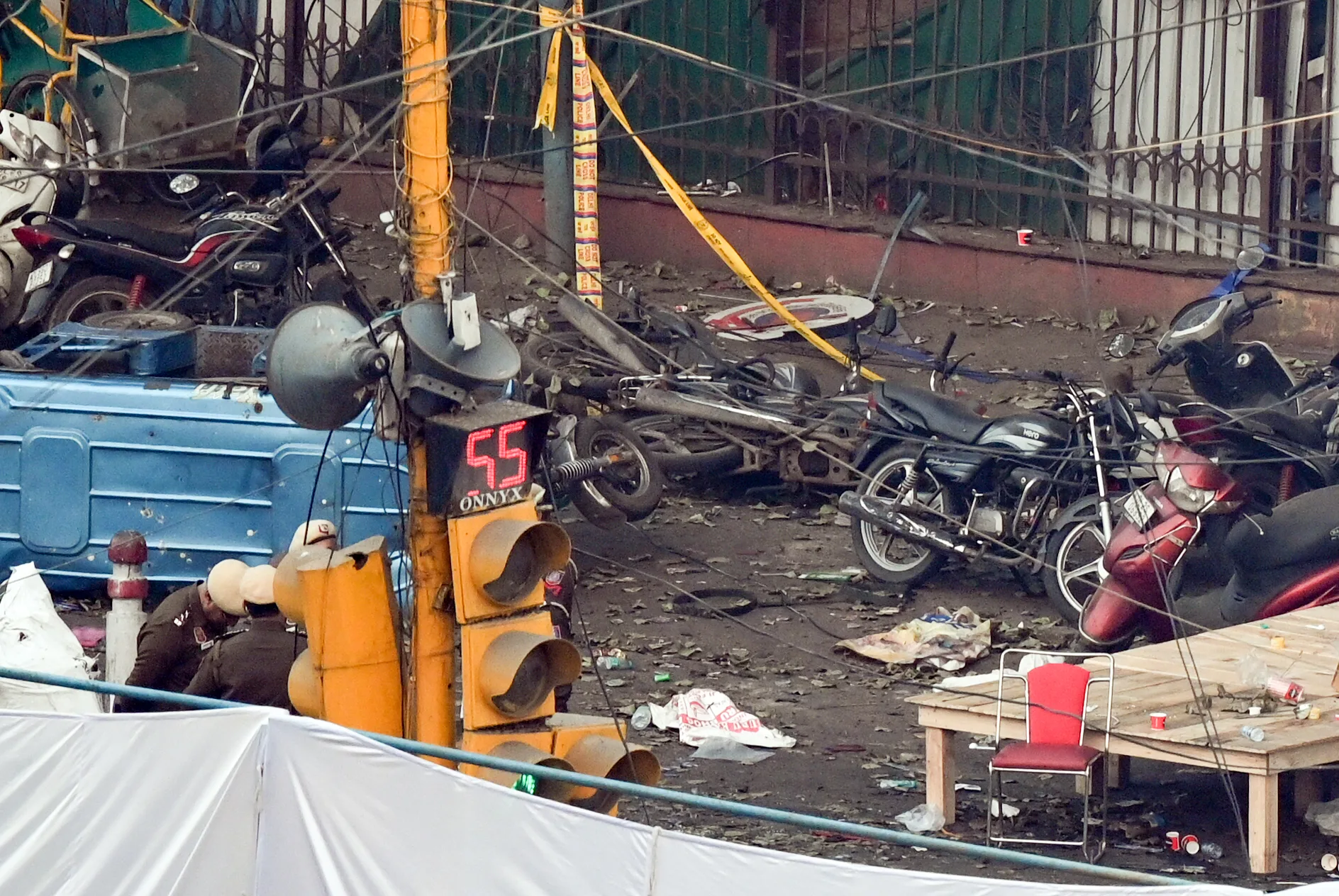
New Delhi: Damaged vehicles seen at the spot as a CFSL team arrives to examine the site of the car explosion near the Red Fort during the ongoing investigation, in New Delhi on Wednesday, November 12, 2025. (File Photo: IANS/Deepak Kumar)
On November 10, a car exploded near the Red Fort in New Delhi, killing at least 15 people and injuring over 20 others. This was one of the major terrorist attacks in the heart of India since the 2008 Mumbai terror attacks.
The blast was linked to a larger white-collar terror module, which had been busted just days earlier by Jammu and Kashmir police.
The bomber, Dr Umar Un Nabi, was part of the terror module busted at Al-Falah University in Haryana’s Faridabad. Several more doctors were arrested by the security agencies, and an investigation is currently underway.
IndiGo Meltdown
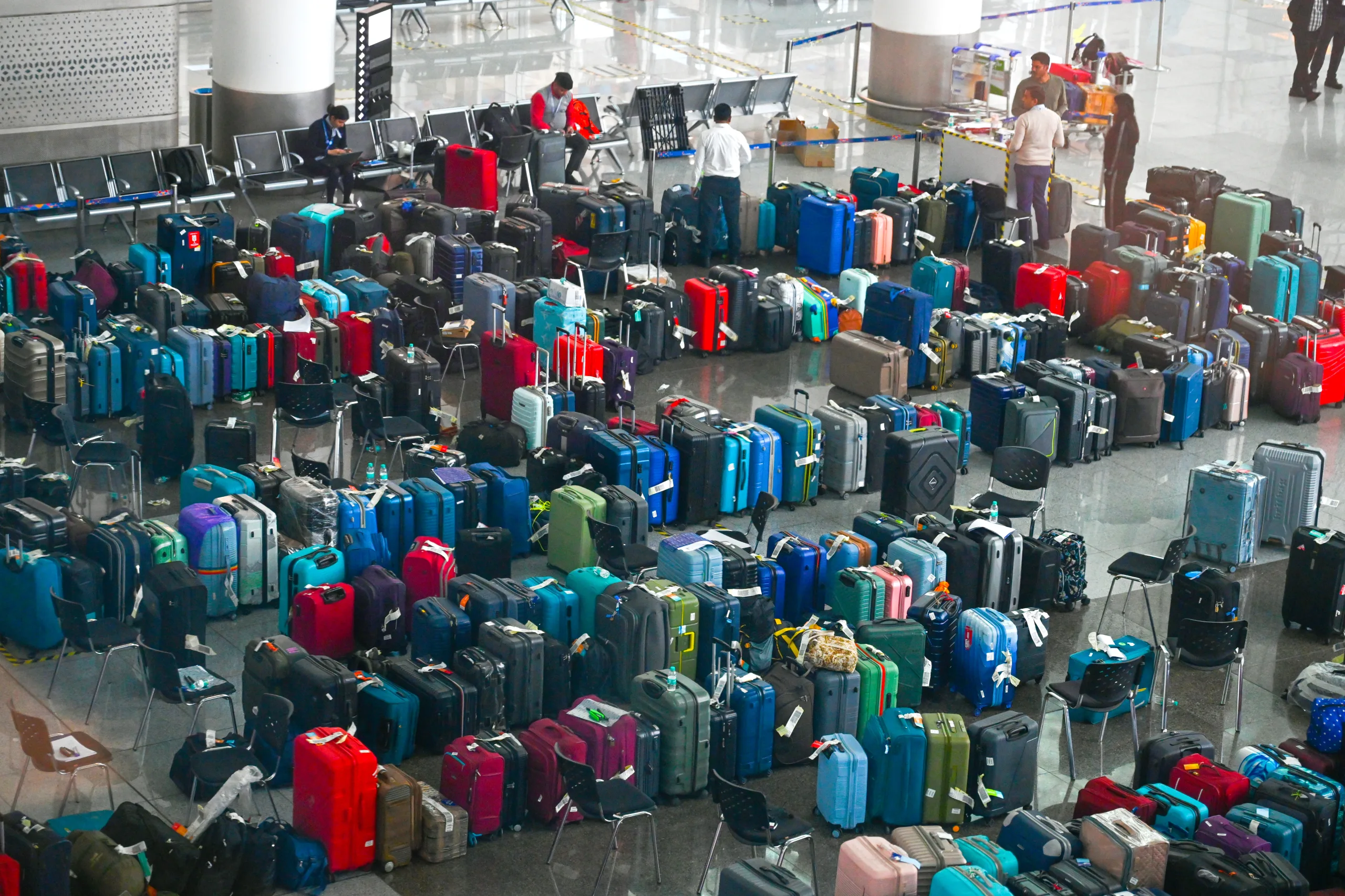
New Delhi: A large heap of passengers’ suitcases is seen at IGI Airport amid mass cancellations of IndiGo flights as the airline grapples with a major operational crisis in New Delhi on Monday, December 8, 2025. (File Photo: IANS/Deepak Kumar)
The most recent but significant event of 2025 was the IndiGo crisis. Thousands of IndiGo flights were cancelled in the first week of December, leaving tens of thousands of passengers stranded at airports across the country.
The crisis, one of the worst in India’s aviation sector, stemmed from IndiGo’s failure to comply with the DGCA’s new duty rules.
IndiGo said that the Flight Duty Time Limitation (FTDL) rules, along with issues such as bad weather, led to crew shortages and disruptions in its services. The airline has hired private aviation experts to conduct a root-cause analysis of the disruptions, and a final report is awaited.
Addressing graduating cadets at the NDA’s Khetarpal Parade Ground in Khadakwasla, General Upendra Dwivedi termed Operation Sindoor as a defining example of India’s military response doctrine in the face of provocation.
Reviewing the NDA's landmark 150th course parade, General Upendra Dwivedi stressed technology-led military preparedness and praised the growing participation of women cadets.
Addressing BSF personnel stationed at the outpost, Amit Shah said the force upheld its long-standing tradition of defending the nation under difficult circumstances and ensured that residents living near the international border did not lose morale during heightened tensions.